![[re]living performance](http://images.squarespace-cdn.com/content/v1/64ea1efd68aa4d0b5bbc4c2c/8c034368-362d-4627-b9cf-a0a607b04a91/25+%5BRE%5DLiving+Blk%3AYellow+Logo.png?format=1500w)
How Long Until Therapy Helps? A Caring Timeline for Runners, Golfers & Performance Athletes in Greenville
When you are used to the rhythmic pace of the Swamp Rabbit Trail or the precise rotation of a golf swing, being sidelined by pain feels like more than a physical setback. It is a loss of identity and routine. You might be wondering how many weeks of rest are required before you can return to your sport without that nagging ache in your knee or hip.
At [re]living performance, we understand the frustration of the "wait and see" approach. You want a clear timeline and a fast track back to performance. While every body is different, our specialized approach to performance physical therapy in Greenville, SC is designed to move you through the healing process efficiently, ensuring you do not just feel better, but perform better.
Understanding the Healing Timeline
One of the biggest misconceptions in recovery is that the absence of pain means you are fully healed. In reality, pain is often the first thing to resolve, but function and tissue resilience take longer to restore.
For example, if you are dealing with Achilles tendinopathyor a rotator cuff strain, the inflammatory phase might subside within days, but rebuilding the strength to handle a 10-mile run or a powerful drive off the tee takes considerably more time. Focusing only on pain relief without addressing the underlying mechanics is what leads to the frustrating cycle of feeling good for one workout, only to have symptoms return the next.
At [re]living performance, we focus on tissue remodeling and neuromuscular re-education so that when you return to your sport, your body is genuinely capable of handling the demands placed on it.
Factors That Influence Your Recovery Speed
While our approach is designed for efficiency, several variables affect how quickly you will see meaningful progress.
Injury chronicity: Acute injuries often resolve faster than chronic issues that have been present for months or years.
Tissue type: Muscles generally heal faster than tendons or ligaments due to a more robust blood supply, which is why conditions like IT band syndrome or plantar fasciitis require a patient, progressive approach.
Consistency: Following your home exercise program between sessions is essential for maintaining the gains made during each visit.
Holistic factors: Sleep quality, stress levels, and nutrition all shape the internal environment your body needs to repair and adapt.
Understanding these factors helps set realistic expectations and allows your therapist to build a plan that accounts for your specific situation.
A Three-Phase Approach to Getting You Back in the Game
At [re]living performance, recovery is not a generic protocol. It follows a structured, three-phase process designed to take you from pain management all the way through to full athletic performance.
Phase One: Assessment and Symptom Management
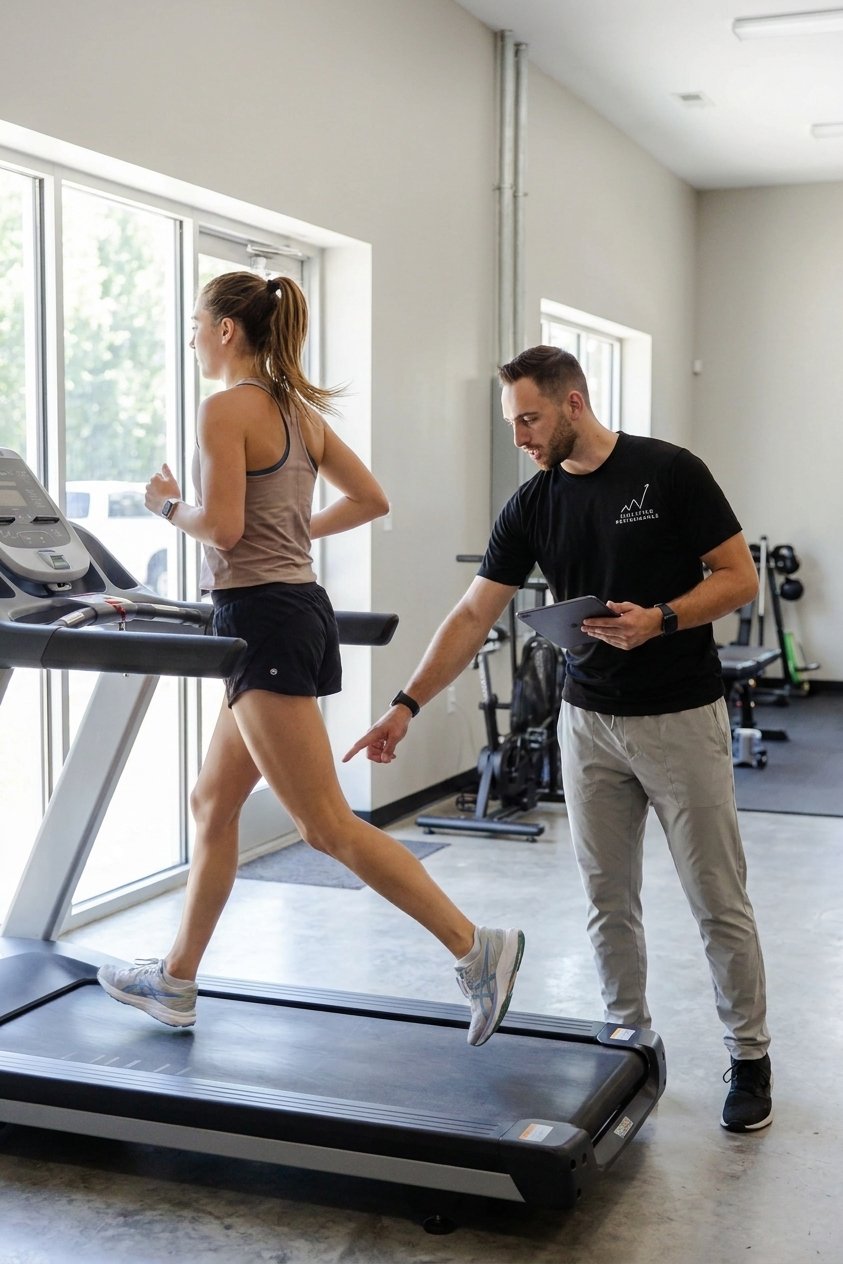
Your journey begins with a comprehensive, one-on-one session. The focus is not only on where it hurts, but on how you move. For a runner, this might involve a running gait analysis to identify whether a hip drop is contributing to runner's knee. For a golfer, it might mean evaluating thoracic mobility and shoulder mechanics to understand the source of golfer's elbow.
During this phase, hands-on treatments such as dry needling,myofascial release, joint mobilization, and soft tissue mobilization are used to reduce pain and calm the nervous system. The goal is to provide meaningful symptom relief while giving you a clear picture of what is actually happening in your body.
Phase Two: Addressing Root Causes
Once initial symptoms are managed, the focus shifts to correcting the underlying mechanical issues driving your injury. This is where manual therapy and targeted therapeutic exercise work together to restore proper movement patterns.
Because sessions at [re]living performance are one-on-one for the full duration of your visit, your therapist can adjust your treatment in real time based on how your body responds. There is no waiting, no rotating between tables, and no one-size-fits-all exercise sheet. Treatments during this phase may include IASTM, trigger point therapy, blood flow restriction training, and balance and proprioception work, depending on what your body needs.
Phase Three: Performance Training and Return to Sport
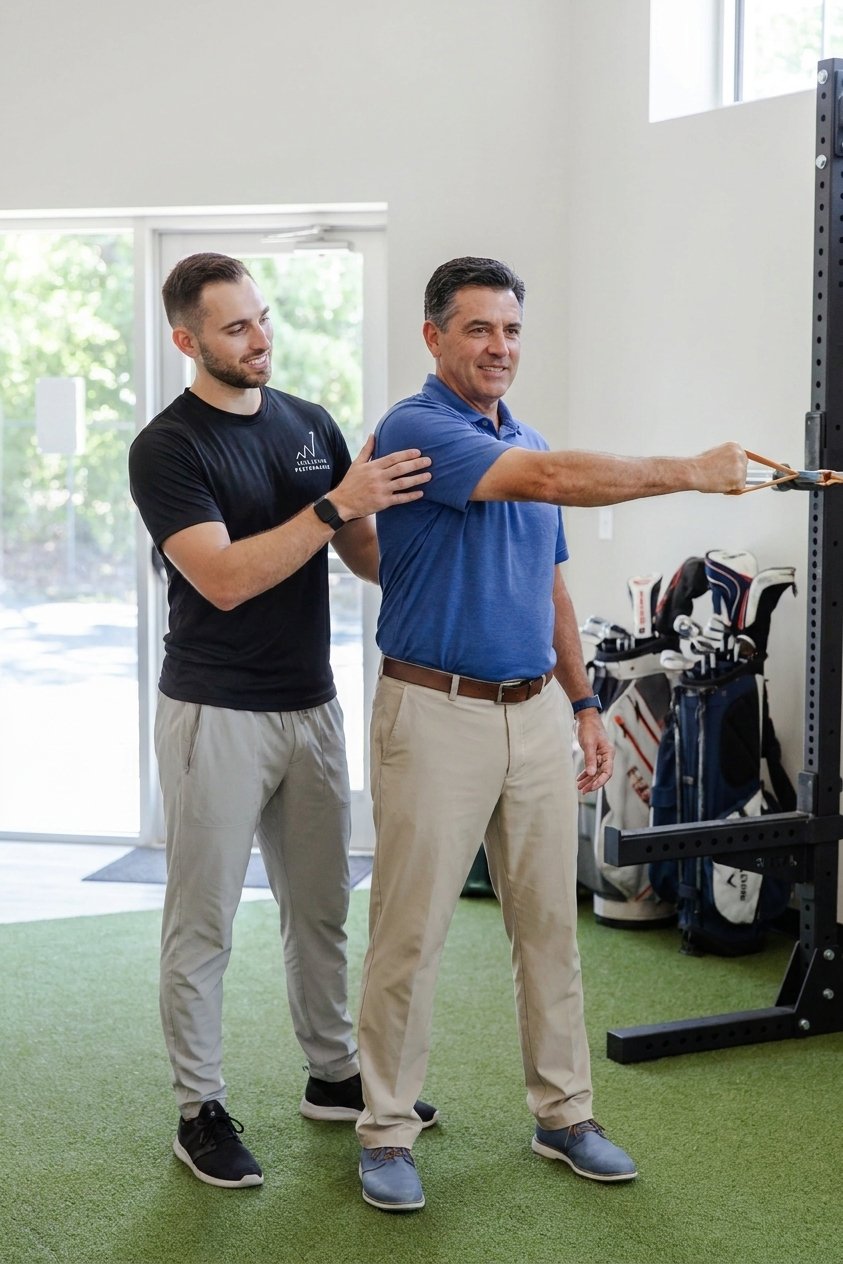
The final phase is where recovery transitions into performance. Rather than simply clearing you to return to activity, [re]living performance uses return-to-sport testing and functional movement assessments to confirm that your body is objectively ready for the demands of your sport.
This phase incorporates plyometrics, strength building, and sport-specific progressions to ensure you are not just pain-free, but genuinely prepared. Whether you are building the explosive power needed for a sprint finish or the rotational stability required for 18 holes, the goal is to return you to full performance with confidence.
Why One-on-One Care Accelerates Results
In a traditional clinic setting, a therapist may manage multiple patients simultaneously, leaving individuals to complete exercises independently for much of their visit. At [re]living performance, you work directly with aDoctor of Physical Therapy for every minute of your session.
This model allows for deeper manual therapy, more precise exercise cueing, and the ability to pivot the plan immediately when something is not working. The result is faster progress, fewer total visits, and a more direct path back to the activities you love in Greenville.
Ready to Get Back to What You Love?
You do not have to navigate your recovery alone or settle for a slow return to activity. Whether you are training for a half-marathon, working to eliminate back pain on the golf course, or recovering from a hamstring strain or ankle sprain, [re]living performance is here to provide clarity, structure, and a clear path back to peak performance.
Visit [re]living performance at relivingperformance.com to schedule your initial session and take the first step toward getting back to what matters most.